

Awaken Gold
$99 from Awakened Alchemy
The product performs well across the areas assessed, but the evidence is not yet strong enough to recommend it.
Pages used for this rating.
4.51 out of 5 · 67 ratings
Mendi uses fNIRS to measure blood flow and oxygenation in the prefrontal cortex
SupportedExplicitly stated in product and science pages.
Not a finished-product study.
Mendi provides real-time neurofeedback for brain training
UnresolvedOfficial page and homepage say the device reads brain activity in real time and provides feedback during training sessions.
Missing a required intervention or setting term. Not a finished-product study. Preprint: not confirmed as peer reviewed.
The device is non-invasive and uses no electrical stimulation, needles, or gels
SupportedRepeated on the official product and homepage.
Not a finished-product study.
One headset can be shared by multiple users through separate profiles
SupportedExplicitly stated on the official product page.
Not a finished-product study.
Mendi trains focus and attention
UnresolvedMarketing and science pages claim focus/attention training; evidence provided suggests possible but not definitive benefit.
Not a finished-product study.
Mendi improves sustained focus by 42% after 8 weeks
UnresolvedThe official site reports aggregated in-app/self-reported outcomes, but no independent clinical confirmation is provided in the evidence set.
Not a finished-product study.
Mendi reduces perceived stress, improves mood/emotional balance, and improves general wellbeing
UnresolvedThe site reports self-reported improvements after 8 weeks, but this is not enough to establish reliable general benefit.
Not a finished-product study.
Mendi is safe for daily use because it is built on decades of fNIRS research
UnresolvedThe page states research history and non-invasive design, but broad safety claims are not directly established here.
Not a finished-product study. Missing a required intervention or setting term.
Quality signals combine supported product disclosures and warranty coverage.
Moderate claim risk with 4 disclosed cautions or contraindications.
No customer review data is available for this product yet.
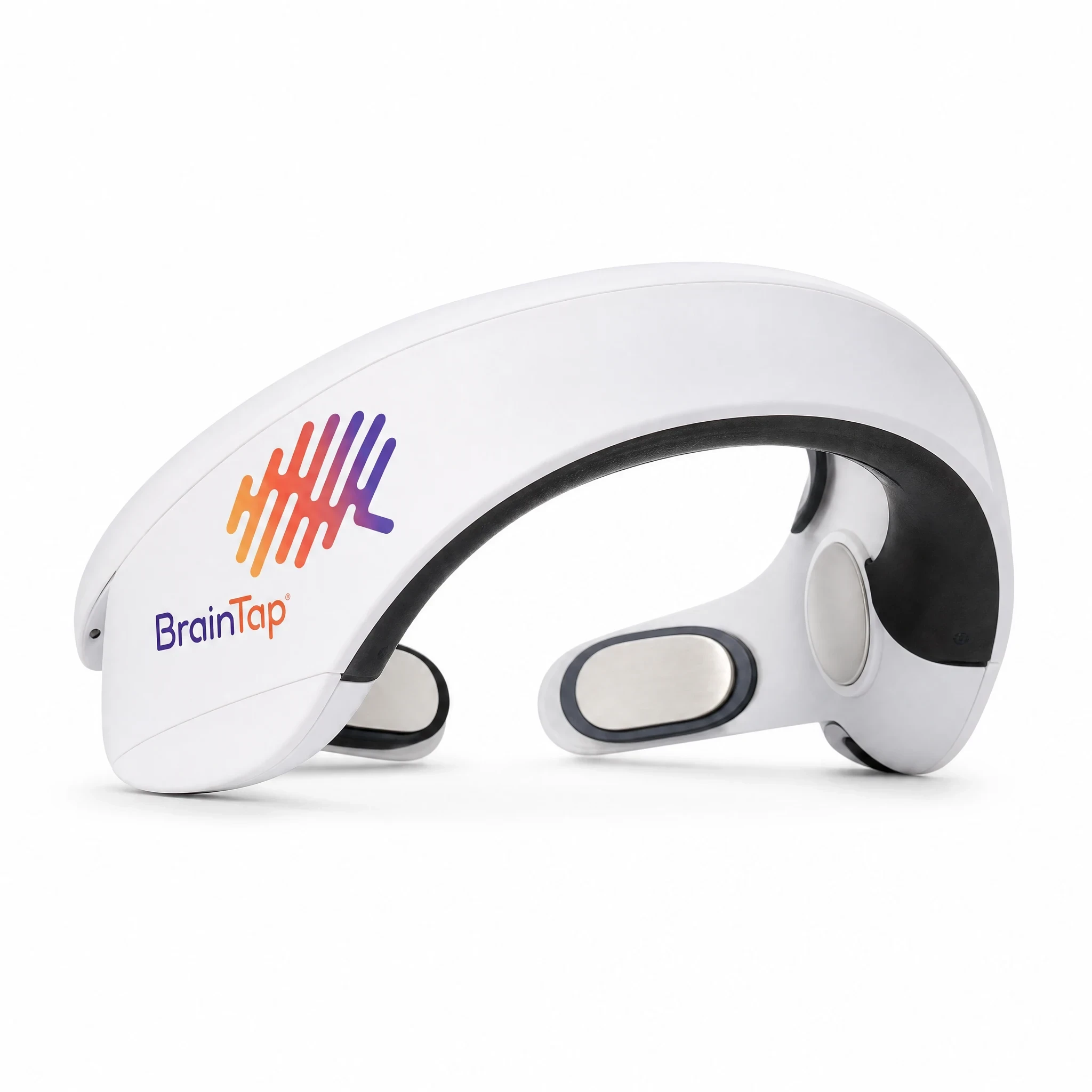
Mendi is a neurofeedback brain training system designed to enhance cognitive functions such as focus, decision-making, and emotional regulation. It uses functional Near-Infrared Spectroscopy (fNIRS) technology to measure brain activity in the prefrontal cortex, providing real-time feedback to users. This feedback helps users strengthen neural pathways, improving mental agility and resilience.
The Mendi system includes a headband and a mobile app, which together offer a gamified training experience. Users can visualize their brain activity and track progress over time, making brain training both engaging and effective. Regular use of Mendi is reported to improve focus, stress management, and overall mental well-being, supporting a healthier brain and lifestyle.
Public product mentions, recommendations, or promotions. These relationships do not establish that a product is effective.

Image source: Apollo Neuro blog, 2025
The transcript briefly names Mendi while discussing neurofeedback options. It does not establish a product recommendation.
Dave Asprey’s FULL Masterclass on Cognitive Enhancement : 1217
The evidence supports that Mendi is an fNIRS-based neurofeedback headset that measures prefrontal cortex blood oxygenation and provides real-time feedback. The strongest product-specific evidence shown here is technical: it can detect changes in prefrontal activity and is built for consumer use. Claims about improving focus, stress, mood, or mental clarity are more tentative; the provided evidence suggests possible benefits, but it does not establish broad clinical effectiveness.
No reader ratings yet. If you have used this product, your experience could help the next person decide.
No reviews yet
Share the first rating.
No comments yet
Start the conversation.
The product performs well across the areas assessed, but the evidence is not yet strong enough to recommend it.
Pages used for this rating.
4.51 out of 5 · 67 ratings
Mendi uses fNIRS to measure blood flow and oxygenation in the prefrontal cortex
SupportedExplicitly stated in product and science pages.
Not a finished-product study.
Mendi provides real-time neurofeedback for brain training
UnresolvedOfficial page and homepage say the device reads brain activity in real time and provides feedback during training sessions.
Missing a required intervention or setting term. Not a finished-product study. Preprint: not confirmed as peer reviewed.
The device is non-invasive and uses no electrical stimulation, needles, or gels
SupportedRepeated on the official product and homepage.
Not a finished-product study.
One headset can be shared by multiple users through separate profiles
SupportedExplicitly stated on the official product page.
Not a finished-product study.
Mendi trains focus and attention
UnresolvedMarketing and science pages claim focus/attention training; evidence provided suggests possible but not definitive benefit.
Not a finished-product study.
Mendi improves sustained focus by 42% after 8 weeks
UnresolvedThe official site reports aggregated in-app/self-reported outcomes, but no independent clinical confirmation is provided in the evidence set.
Not a finished-product study.
Mendi reduces perceived stress, improves mood/emotional balance, and improves general wellbeing
UnresolvedThe site reports self-reported improvements after 8 weeks, but this is not enough to establish reliable general benefit.
Not a finished-product study.
Mendi is safe for daily use because it is built on decades of fNIRS research
UnresolvedThe page states research history and non-invasive design, but broad safety claims are not directly established here.
Not a finished-product study. Missing a required intervention or setting term.
Quality signals combine supported product disclosures and warranty coverage.
Moderate claim risk with 4 disclosed cautions or contraindications.
No customer review data is available for this product yet.
Mendi is a neurofeedback brain training system designed to enhance cognitive functions such as focus, decision-making, and emotional regulation. It uses functional Near-Infrared Spectroscopy (fNIRS) technology to measure brain activity in the prefrontal cortex, providing real-time feedback to users. This feedback helps users strengthen neural pathways, improving mental agility and resilience.
The Mendi system includes a headband and a mobile app, which together offer a gamified training experience. Users can visualize their brain activity and track progress over time, making brain training both engaging and effective. Regular use of Mendi is reported to improve focus, stress management, and overall mental well-being, supporting a healthier brain and lifestyle.
Public product mentions, recommendations, or promotions. These relationships do not establish that a product is effective.
Image source: Apollo Neuro blog, 2025
The transcript briefly names Mendi while discussing neurofeedback options. It does not establish a product recommendation.
Dave Asprey’s FULL Masterclass on Cognitive Enhancement : 1217The evidence supports that Mendi is an fNIRS-based neurofeedback headset that measures prefrontal cortex blood oxygenation and provides real-time feedback. The strongest product-specific evidence shown here is technical: it can detect changes in prefrontal activity and is built for consumer use. Claims about improving focus, stress, mood, or mental clarity are more tentative; the provided evidence suggests possible benefits, but it does not establish broad clinical effectiveness.
No reader ratings yet. If you have used this product, your experience could help the next person decide.
No reviews yet
Share the first rating.
No comments yet
Start the conversation.
Image source: Luke Storey official website
The transcript includes a 20% Mendi offer and discount code. This is commercial exposure, not an independent assessment of effectiveness.
Image source: Luke Storey official website
The transcript includes a 20% Mendi offer and discount code. This is commercial exposure, not an independent assessment of effectiveness.