
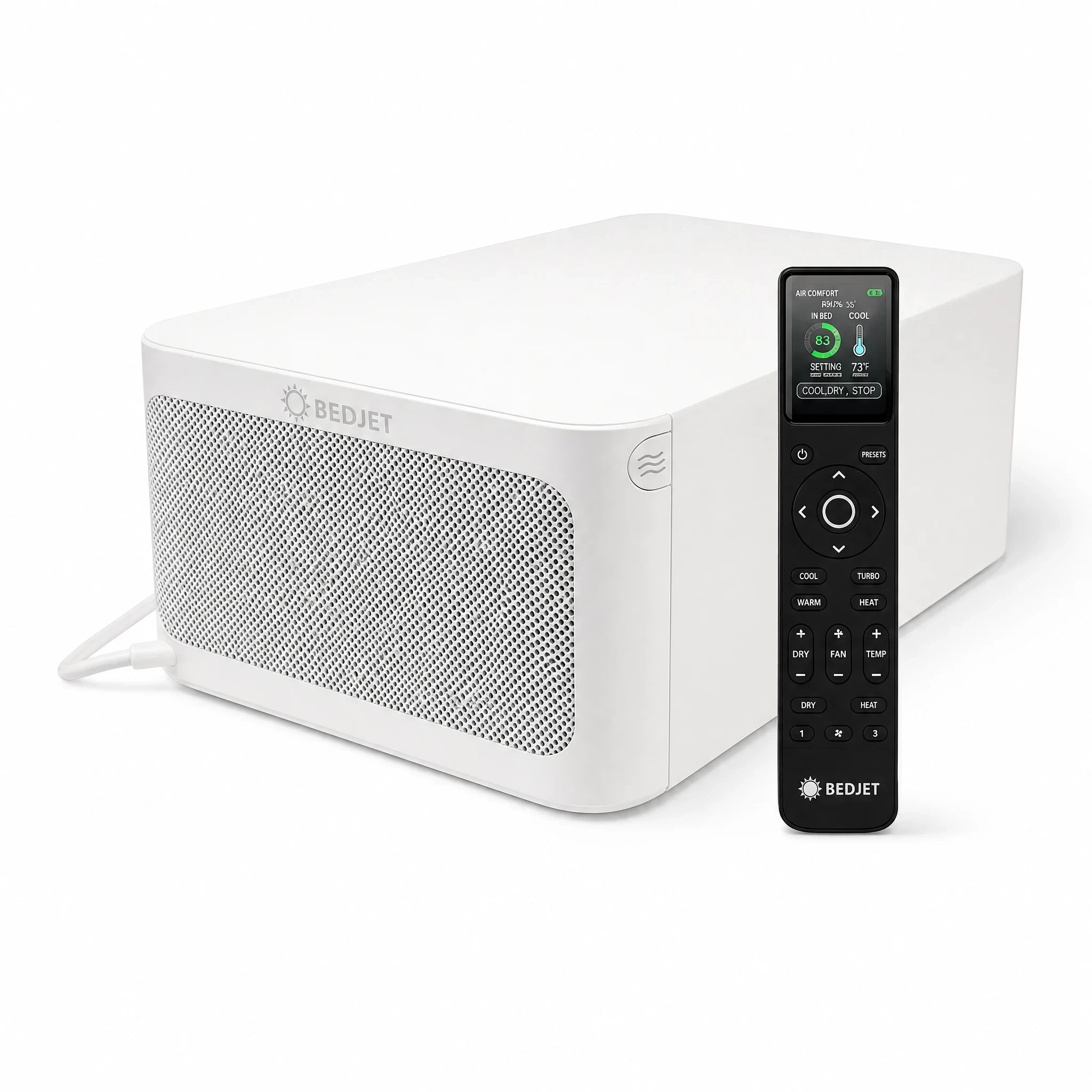
BedJet 3
$569 from BedJet
We may earn a commission from this eligible link at no extra cost to you. Affiliate disclosure
Research exists for related evidence, but it has not established this finished product's claims.
Pages used for this rating.
Claims and specifications
Iris night settings are designed to support sleep by lowering blue light exposure.
UnresolvedBiologically plausible and consistent with circadian research, but not directly clinically validated for Iris.
Missing a required intervention or setting term. Not a finished-product study.
Iris can decrease blue light emitted from the screen.
SupportedDirectly stated on official pages; research source aligns with blue-light filtering approach.
Not a finished-product study. Missing a required intervention or setting term.
Iris controls brightness without PWM flicker.
SupportedSupported by official product descriptions and research summary referencing PWM control.
Iris can reduce eye strain and eye pain during computer use.
UnresolvedOfficial marketing claims this, but no direct clinical studies of Iris itself were provided.
Iris automatically adjusts screen color temperature and brightness based on time of day.
SupportedExplicitly described on the official pages.
Reducing blue light at night helps the body produce more melatonin and fall asleep faster.
SupportedStated on official pages and consistent with the cited circadian biology research; still not Iris-specific clinical evidence.
Missing a required intervention or setting term. Not a finished-product study.
Still researching: Effectiveness research and Verified customer ratings.
Quality signals combine supported product disclosures and warranty coverage.
Moderate claim risk with 8 disclosed cautions or contraindications.
Lifelong license
Iris is a software designed to protect your eyes and improve your overall health by managing the blue light emitted from screens. It reduces eye strain by optimizing screen pulsations and controlling brightness without using PWM (Pulse Width Modulation), which can cause headaches. By matching screen brightness to ambient light, Iris makes using computers feel more like reading a book, reducing eye pain.
The software also helps improve sleep by regulating blue light exposure throughout the day and night. This regulation supports the body's natural production of melatonin, helping users fall asleep faster and enjoy deeper sleep. Iris offers various presets and advanced settings, allowing users to customize their screen's color temperature and brightness to suit different activities and environments.
Iris is suitable for a wide range of users, including children, teenagers, students, adults, and seniors. It provides specific benefits for each group, such as reducing eye strain for students studying late at night or helping seniors delay eyesight degeneration. The software is available for multiple platforms, including Windows, macOS, Linux, and mobile devices, making it accessible for anyone looking to protect their eyes and improve their health.
The supplied reviews support cognitive behavioral therapy and some behavioral and pharmacological interventions for adults with insomnia, with cognitive behavioral therapy considered an effective first-line option from a safety perspective. None of the supplied research evaluated Iris, blue-light-filtering software, screen color-temperature adjustments, or PWM-free dimming. Sleep, eye-comfort, and vision outcomes from Iris therefore remain unverified, and the software should not be treated as a treatment for insomnia or an eye condition.
No reader ratings yet. If you have used this product, your experience could help the next person decide.
No reviews yet
Share the first rating.
No comments yet
Start the conversation.
We may earn a commission from this eligible link at no extra cost to you. Affiliate disclosure
Research exists for related evidence, but it has not established this finished product's claims.
Pages used for this rating.
Claims and specifications
Iris night settings are designed to support sleep by lowering blue light exposure.
UnresolvedBiologically plausible and consistent with circadian research, but not directly clinically validated for Iris.
Missing a required intervention or setting term. Not a finished-product study.
Iris can decrease blue light emitted from the screen.
SupportedDirectly stated on official pages; research source aligns with blue-light filtering approach.
Not a finished-product study. Missing a required intervention or setting term.
Iris controls brightness without PWM flicker.
SupportedSupported by official product descriptions and research summary referencing PWM control.
Iris can reduce eye strain and eye pain during computer use.
UnresolvedOfficial marketing claims this, but no direct clinical studies of Iris itself were provided.
Iris automatically adjusts screen color temperature and brightness based on time of day.
SupportedExplicitly described on the official pages.
Reducing blue light at night helps the body produce more melatonin and fall asleep faster.
SupportedStated on official pages and consistent with the cited circadian biology research; still not Iris-specific clinical evidence.
Missing a required intervention or setting term. Not a finished-product study.
Still researching: Effectiveness research and Verified customer ratings.
Quality signals combine supported product disclosures and warranty coverage.
Moderate claim risk with 8 disclosed cautions or contraindications.
Lifelong license
Iris is a software designed to protect your eyes and improve your overall health by managing the blue light emitted from screens. It reduces eye strain by optimizing screen pulsations and controlling brightness without using PWM (Pulse Width Modulation), which can cause headaches. By matching screen brightness to ambient light, Iris makes using computers feel more like reading a book, reducing eye pain.
The software also helps improve sleep by regulating blue light exposure throughout the day and night. This regulation supports the body's natural production of melatonin, helping users fall asleep faster and enjoy deeper sleep. Iris offers various presets and advanced settings, allowing users to customize their screen's color temperature and brightness to suit different activities and environments.
Iris is suitable for a wide range of users, including children, teenagers, students, adults, and seniors. It provides specific benefits for each group, such as reducing eye strain for students studying late at night or helping seniors delay eyesight degeneration. The software is available for multiple platforms, including Windows, macOS, Linux, and mobile devices, making it accessible for anyone looking to protect their eyes and improve their health.
The supplied reviews support cognitive behavioral therapy and some behavioral and pharmacological interventions for adults with insomnia, with cognitive behavioral therapy considered an effective first-line option from a safety perspective. None of the supplied research evaluated Iris, blue-light-filtering software, screen color-temperature adjustments, or PWM-free dimming. Sleep, eye-comfort, and vision outcomes from Iris therefore remain unverified, and the software should not be treated as a treatment for insomnia or an eye condition.
No reader ratings yet. If you have used this product, your experience could help the next person decide.
No reviews yet
Share the first rating.
No comments yet
Start the conversation.