Intermittent Fasting Schedule: 16:8 vs 18:6 vs OMAD
Compare intermittent fasting schedules including 16:8, 18:6, and OMAD, with evidence on timing, adherence, safety, and choosing a sustainable window.
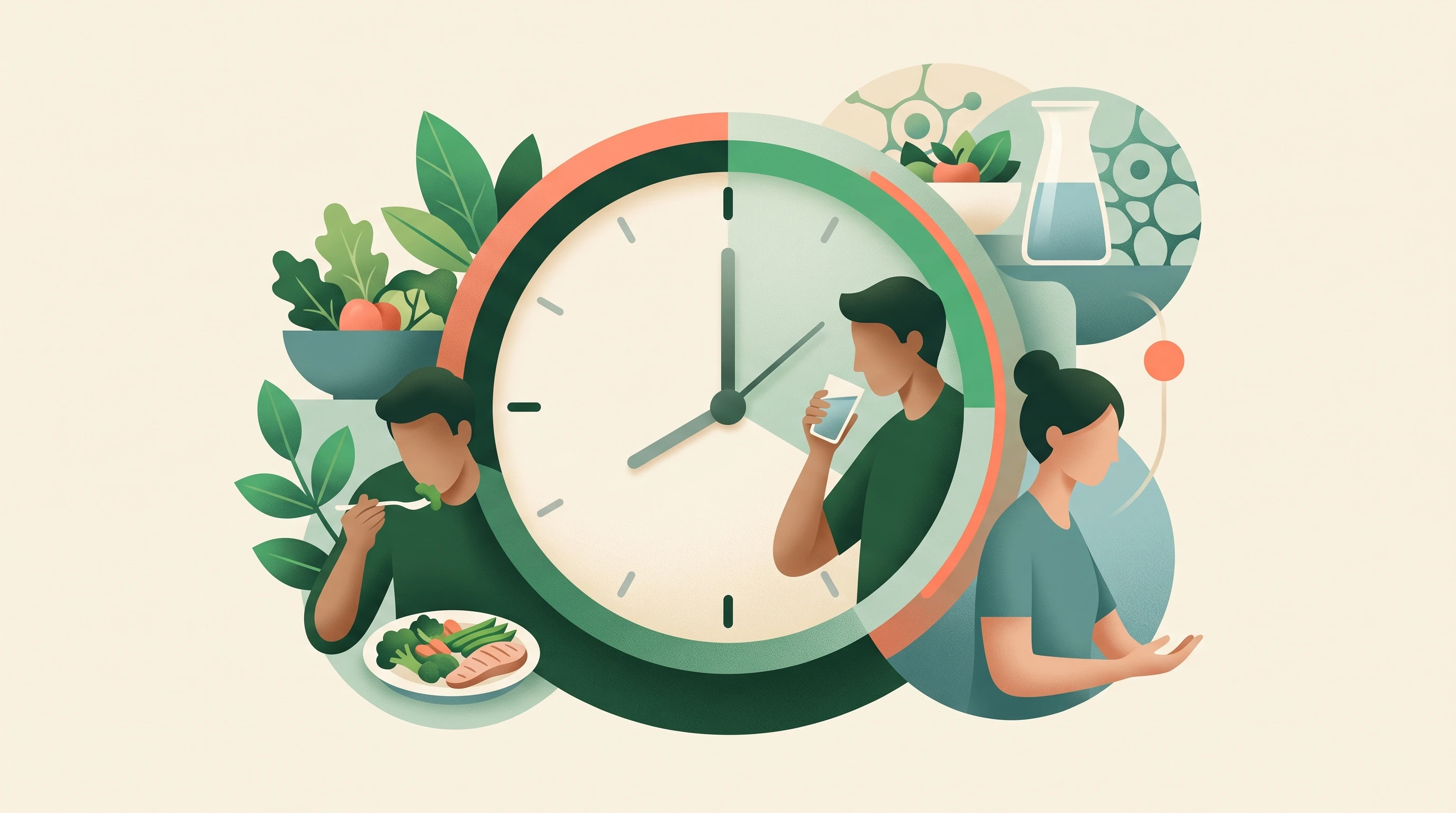
Intermittent fasting is less a diet than a schedule: you compress your eating into a defined window and fast the rest of the day. The appeal is simplicity and a set of real metabolic effects, from improved insulin sensitivity to a modest boost in cellular cleanup. But the specific schedule you choose, and how you time it against your body clock, makes a large difference in both results and sustainability.
This guide compares the three most popular schedules, explains why eating earlier in the day matters, flags who should not fast, and covers the electrolyte details that keep longer fasts comfortable.
How intermittent fasting works
When you stop eating, insulin generally falls and the body draws more energy from stored fuel. The timing and degree of that shift vary with the prior meal, activity, and the person. Extended fasting affects autophagy in laboratory models, but researchers have not established a simple hour-by-hour threshold for humans.
Most real-world benefit may come from two ordinary mechanisms: a shorter eating window can reduce total intake, and earlier timing may align eating with circadian biology. A 2024 meta-analysis of early time-restricted eating found improvements in several metabolic outcomes, while noting meaningful differences among trials.
The best fasting schedule is the one you can hold for months, not the most aggressive one you can survive for a week.
The three main schedules compared
16:8 (16-hour fast, 8-hour window). The default and the most sustainable. For example, eating between noon and 8 p.m. It reliably reduces snacking and total intake without demanding much willpower, and it fits normal social life. Best for beginners and most maintenance goals (strong evidence for adherence and metabolic markers).
18:6 (18-hour fast, 6-hour window). A tighter window that deepens the daily fasted period and often produces a slightly larger calorie deficit. Autophagy and fat oxidation have more time to ramp up. Better suited to people already comfortable with 16:8 who want more from the same framework (moderate evidence).
OMAD (one meal a day). All calories in a single 1 to 2 hour window. It maximizes fasting duration but makes it genuinely difficult to hit protein and micronutrient targets in one sitting, and it can drive under-eating or binge patterns in some people. Reserve it for experienced fasters and use it periodically rather than as a permanent default (emerging evidence; higher adherence risk).
There is no metabolic magic that makes a longer fast automatically superior. A recent network meta-analysis comparing intermittent-fasting strategies found modest differences across approaches, not one universally best schedule. Match the schedule to your goals, your training, and your temperament.
Circadian eating: when matters as much as how long
Metabolic responses vary across the day. A systematic review and meta-analysis of meal timing supports a relationship between circadian timing and cardiometabolic outcomes, although the ideal window still depends on the person and study design.
This argues for an earlier eating window when possible. An 8 a.m. to 4 p.m. or 10 a.m. to 6 p.m. window aligns feeding with your body's peak ability to handle food, and it stops eating well before bedtime, which supports better sleep. If you eat late, at minimum try to finish your last meal two to three hours before bed. This overlap with sleep quality is why fasting and rest reinforce each other; see the how to improve deep sleep guide for the temperature and timing side of that equation.
Who should not fast
Intermittent fasting is not universally appropriate. Skip it or seek medical guidance first if you are:
- Pregnant or breastfeeding.
- A person with a history of disordered eating, since restrictive windows can reactivate harmful patterns.
- Managing type 1 diabetes or taking blood-sugar-lowering medication, where fasting risks hypoglycemia without supervision.
- Underweight, an adolescent, or an older adult at risk of losing muscle mass.
- Someone with high physical demands who cannot adequately fuel training within a short window.
Women may also be more sensitive to aggressive fasting, with some reporting menstrual disruption on very tight schedules; a gentler 12:12 or 14:10 is often a better starting point.
Electrolytes and hydration
The most common reasons fasting feels bad, headaches, fatigue, and light-headedness, are usually electrolyte issues, not a lack of food. Low insulin signals the kidneys to shed sodium, and water follows.
- Sodium is the priority. A pinch of quality salt in water during the fast resolves most symptoms.
- Potassium and magnesium matter more on 18:6, OMAD, or any fast beyond 24 hours.
- Water should be steady, not excessive. Chugging plain water without any sodium can actually worsen the imbalance.
Black coffee, plain tea, and water are all fine during the fasting window. For clean electrolyte options without added sugar, see the products page.
Practical protocol
- Start with 12:12 for a week to adjust, then move to 16:8.
- Place your window earlier in the day when your schedule allows; finish eating two to three hours before bed.
- Prioritize protein and whole foods inside the window; fasting does not license junk food.
- Add a pinch of salt to water if you feel headachy or flat.
- Only progress to 18:6 or occasional OMAD once 16:8 feels effortless.
- Do not fast on days with very high training demand unless you can fuel adequately.
Conclusion
The right intermittent fasting schedule is a balance of metabolic benefit and real-world sustainability. For most people, 16:8 with an earlier eating window captures the majority of the upside. Move to tighter windows only if they still let you eat well and train hard, mind your electrolytes, and skip fasting entirely if you fall into one of the higher-risk groups.
This article is for educational purposes and is not medical advice. If you take medication, have a medical condition, or a history of disordered eating, consult a clinician before changing your eating pattern.
Next step: Choose one eating window for the coming week, keep it earlier in the day, and note your energy and hunger before deciding whether to tighten it.